
You’ve got coverage. Now, make some noise!
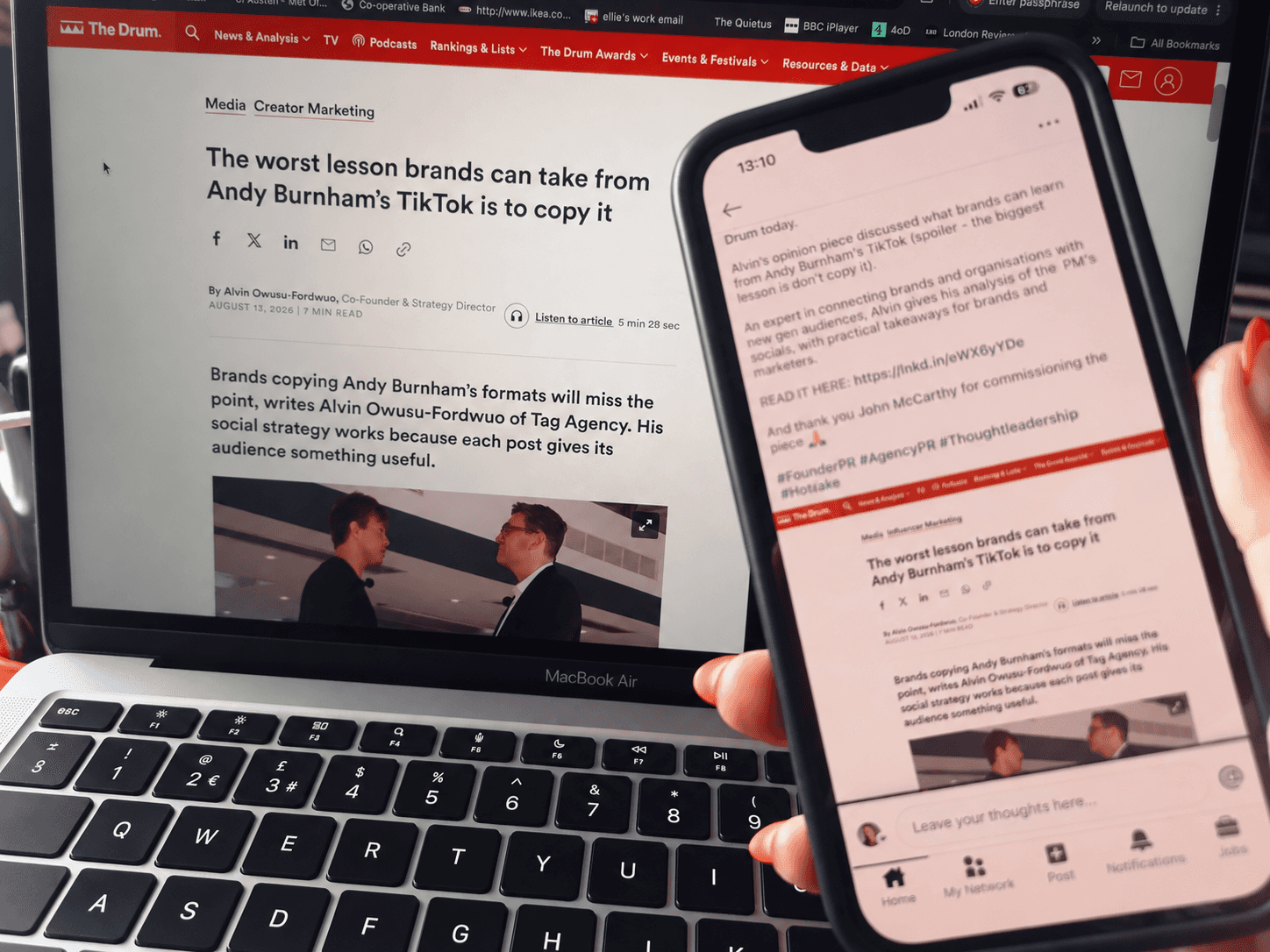
Coverage is the beginning of the conversation, not the end.
Putting yourself out there can feel awkward, particularly if you’re a founder who would rather the work spoke for itself, but if you do secure coverage and do nothing with it, you’re overlooking one of PR’s most valuable functions: creating credible content.
Even when you land an article in a target publication, organic readership is only one part of the picture - the article needs boosting as much as possible.
Coverage gives you the raw material to build a visible paper trail around your expertise, ideas and business, but don’t leave that evidence sitting on someone else’s website; connect it to your own through LinkedIn posts, website content, credentials and other channels.
One article shared well won’t become five separate pieces of evidence, but it can help the internet - and the AI tools people increasingly rely on - to understand more clearly who you are, what you do and which subjects you have authority to speak about.
01. Make some noise on socials
Instead of simply posting the link once, with a “Delighted to be featured in Design Week” comment, tell people what the conversation was actually about and give them a reason to join it.
For example:
“It was great to talk to Design Week about why so many rebrands solve the visual problem but leave the business problem untouched. Here are the three questions we think every leadership team should ask before appointing an agency…”
Make the post the main event by sharing the useful argument, insight or advice in the post itself, rather than expecting people to click a link to find it. You can include the link, but don’t let it do all the work. Posts built around external links tend to achieve less reach on LinkedIn.
Amplify the noise about one piece of coverage:
Trail it beforehand, where the publication is happy for you to do so: “We’re in Design Week on Friday talking about…”
Create several posts from different points in the article: one strong opinion, one practical takeaway, one behind-the-scenes observation or one question for your network.
Turn key ideas into simple, branded graphics or a short talking-head video.
Ask a real question and reply to the people who join the conversation.
Tag the publication and journalist, where appropriate - and your PR person too, if you fancy it :)
Encourage founders, spokespeople and relevant team members to post in their own words. Personal profiles usually create a better conversation than a company page alone.
Give colleagues a suggested line or two, but let them add their own view. A wall of identical posts looks less like enthusiasm and more like a hostage situation.
One important note: don’t post screenshots, scans or reproductions of published coverage unless you have the relevant permission or licence. Linking to the original article is fine. If you want to reproduce coverage, check the publisher’s terms and the NLA for guidance.
02. Put it to work in new business
Coverage is third-party proof. Use it wherever a potential client is deciding whether to trust you.
Add relevant publication logos and short, accurate coverage references to credentials decks, proposals, pitch decks and case studies.
Link to a particularly useful article in prospecting emails or LinkedIn outreach - but explain why it is relevant to that person rather than dropping in a naked link.
Use a strong quote, insight or headline from the piece as a conversation starter with prospects.
Include recent coverage in follow-up emails after meetings when it reinforces something you discussed.
Give your business development team a simple, regularly updated bank of links, approved logos and suggested ways to introduce each piece.
Add standout coverage to award entries, speaker applications, partnership proposals and investor materials where relevant.
The aim is to show that credible third parties take your ideas, work and expertise seriously.
03. Give it a home on your website
If the design of your site allows, create a simple news or insights page so coverage has a life beyond launch day.
You can also:
Add an ‘As seen in’ strip using publication logos, with permission and in line with each publisher’s brand rules.
Link to the best coverage from relevant service, sector, case study and founder biography pages.
Add a short introduction explaining what each piece is about rather than displaying a mysterious row of logos.
Check links every so often. Publications move, archive and occasionally remove pages.
The five-minute version
When coverage lands:
Share it with the whole team.
Plan more than one social post.
Add it to your new-business materials.
Give it a useful home on your website.
Keep the link somewhere everyone can find it again.